Motivated by my training and career as a cellist, I examine interpretation and individuality in classical music — how performers negotiate the constraints and freedoms of this tradition.
The Sounds of Tradition and Individuality in Classical Music
A Novel Quantitative Approach
My research investigates how classical musicians express individuality in performance — and where, perhaps unknowingly, they don't. Through quantitative and qualitative analysis of 23 contemporary recordings of Bach's Fourth Cello Suite Prelude, my doctoral work showed that while cellists sound strikingly different from one another in immediately audible musical features like tempo and bow stroke, their musical shaping — the phrasing and dynamics widely considered the heart of interpretation — is remarkably uniform. In revealing the often invisible constraints of performance tradition, this work calls for greater attention to underexplored dimensions of musical identity, including timbre and bow use, and for a broader conception of interpretive freedoms that looks beyond current performance practice constraints.
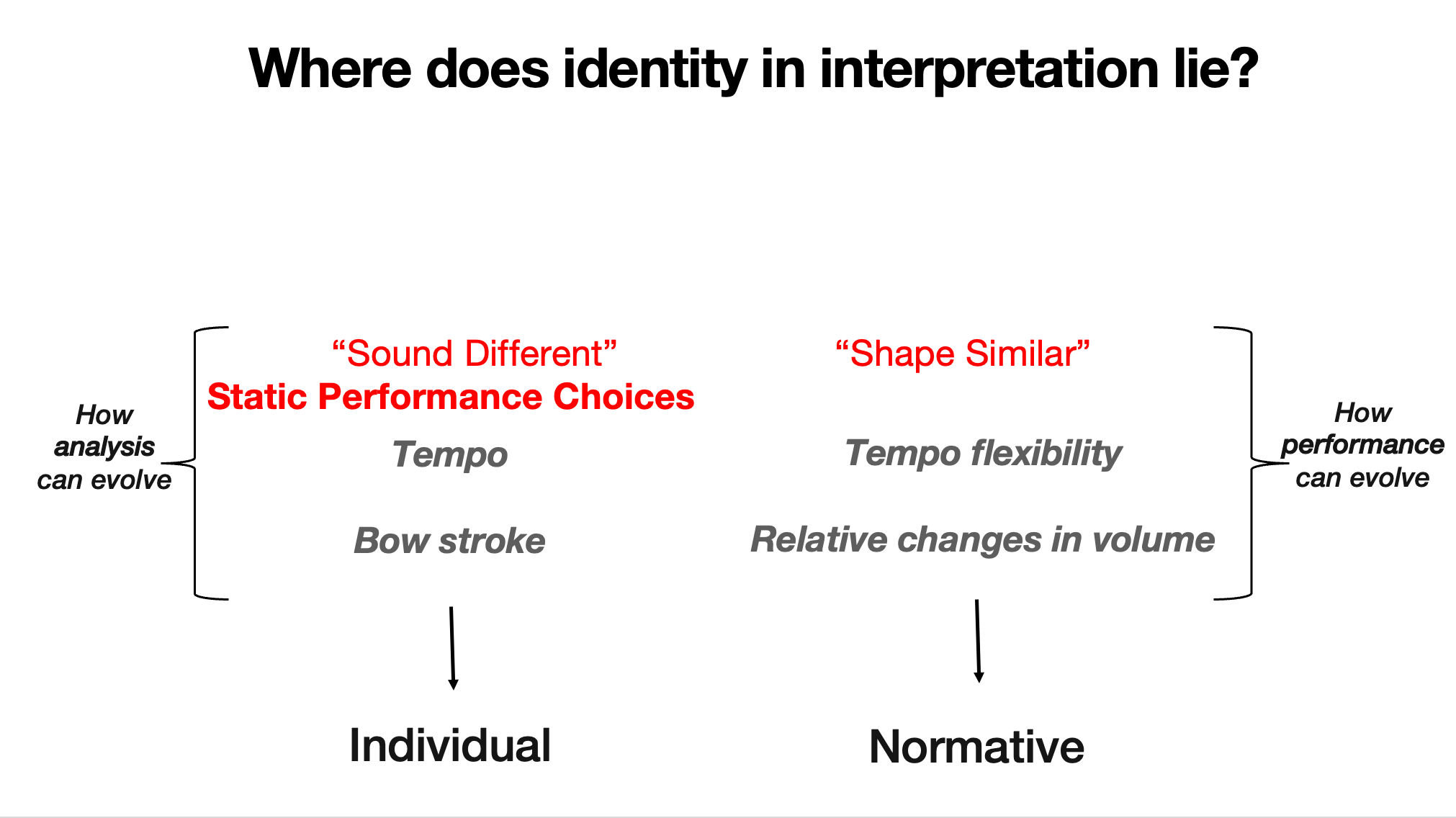
Excerpts from “Unexpected Sources of Interpretive Variety: A Quantitative Study of 23 Performances of Bach's Fourth Cello Suite Prelude” (presented at MTSMA and MTSNYS 2026 conferences)
Rethinking Performance Practice
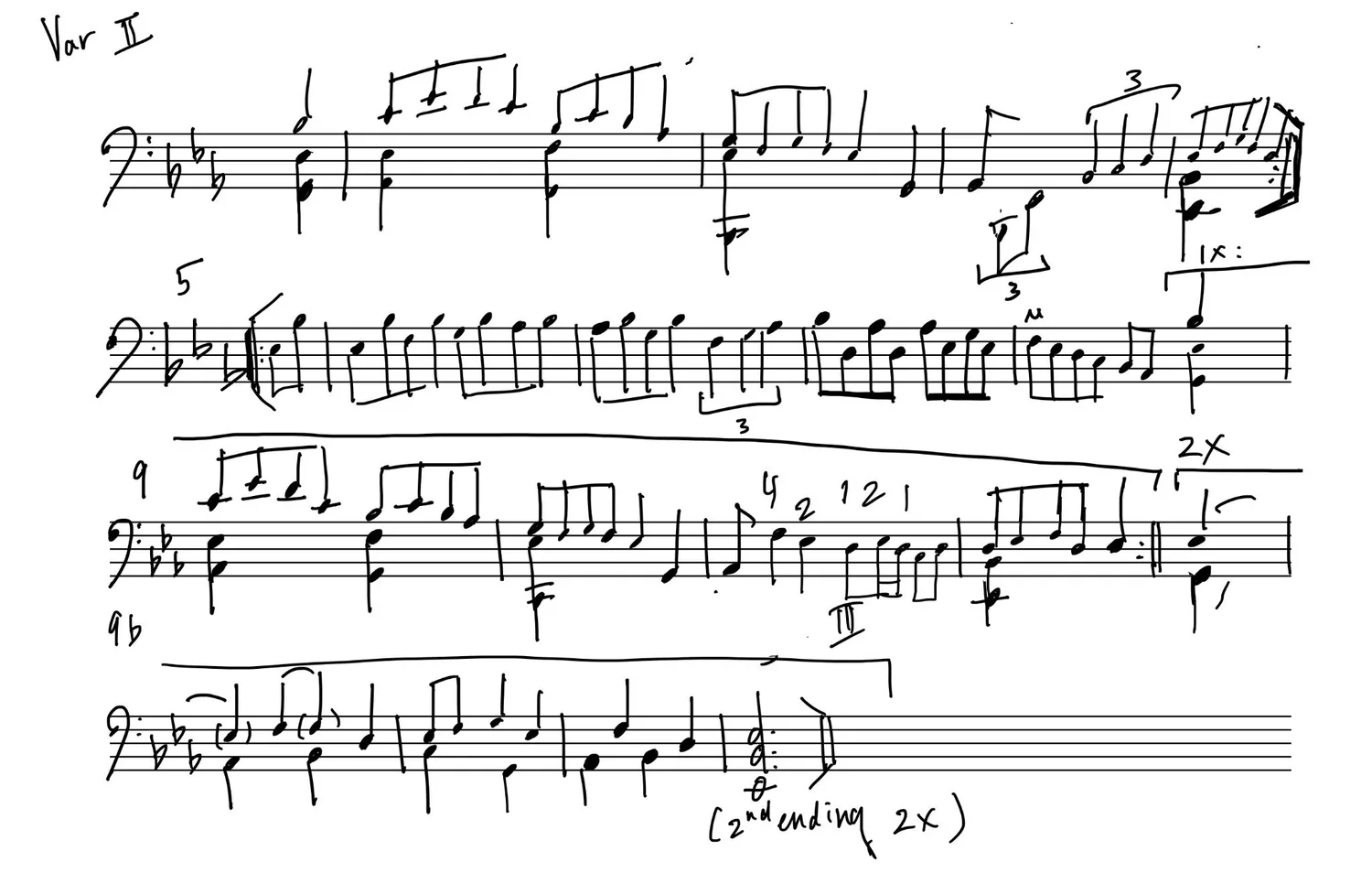
This research has reshaped my own approach to performing and teaching. Rather than learning music exclusively through the study of composers and their scores, I now draw deeply on the study of performers and their interpretations — an approach that has suggested new ways for me to create interpretations and inspires more imaginative playing. My DMA recital embodied this philosophy, pairing Bach's Fourth Suite with works spanning three centuries, each informed by a wide range of influences from cellists, gambists, and Baroque violinists to vocal folk song tradition and the boundaries between acoustic and electronic sound. Two excerpts of this recital are included below:
Clip 1: Inspired by Jordi Savall’s gamba interpretation of Bourrée II from Suite IV featured on his 1998 album Les Voix Humaines, this version includes a transcribed version of Savall’s variation and a new variation I composed myself.
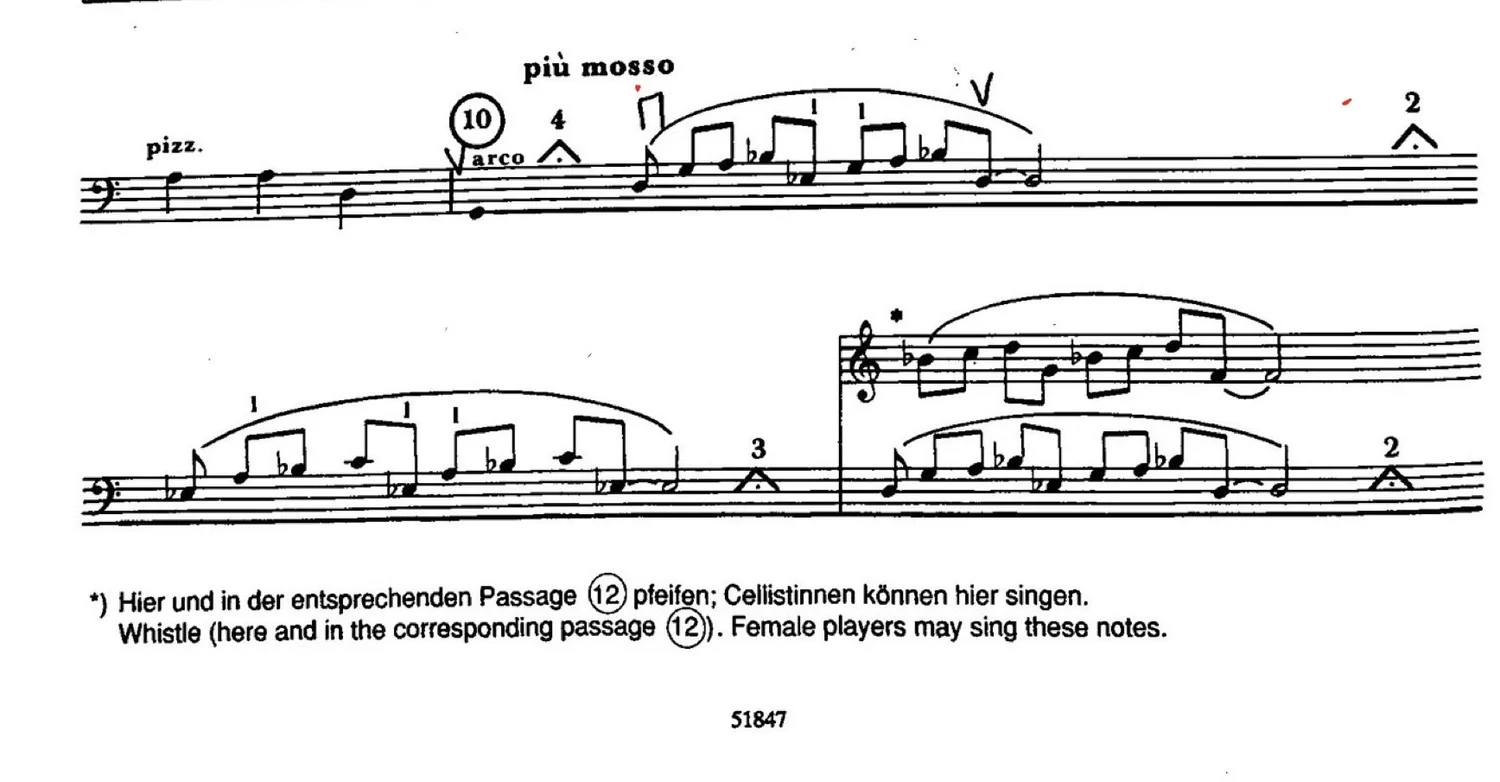
Clip 2: Pēteris Vasks’ Grāmata čellam provides the performer with many liberties: the music is un-metered, and parts of the score have graphic components the performer is invited to freely imagine. In the clip below, the player takes on a new role as singer (or whistler), accompanied by the instrument.
This research from my dissertation is ongoing. Now adapted into two conference papers, it has been accepted at local and international music conferences, including the Music Theory Society of New York State (Vassar College), the 2026 International Timbre Conference (Université de Montréal), and Music Research Today’s conference on Musical Performance (Royal Swedish Academy of Music).
Writing Examples:

Research Interests & Teaching Areas:
cello performance; chamber music; critical writing; contemporary music; interpretation; music performance analysis; performance practice; timbre studies
Clare currently teaches music at Hunter College.